If you have been reading the recent features in BUILD Magazine regarding the surge in North American manufacturing, you’ve likely noticed a common thread: the shift toward vertical integration. When a developer says they "fabricate their own steel," they aren't just bragging about vertical integration; they are talking about removing the single biggest bottleneck in modern industrial construction.
Having spent years on the developer side, I’ve seen projects crumble because a third-party fabricator two states away fell three weeks behind, causing a cascading failure of the entire schedule. When you avoid third-party fabrication risk, you stop being a passenger in your own project timeline. Let’s break down why this matters, especially for cross-border projects requiring complex logistics and stringent engineering standards.
The Reality of Project Timelines: Why "Fast Turnaround" is a Lie
I cannot stand it when people use the phrase "fast turnaround." In industrial real estate, there is no such thing. There is only "planned velocity." If a contractor promises a building in 20 weeks without detailing the fabrication lead times, run. When we look at large-scale industrial assets—like those seen in Ford’s new supply chain hubs or the distribution terminals serviced by Union Pacific—we have to break the timeline into concrete phases to see if the math holds up.
The 24-Week Industrial Build Checklist
- Weeks 1-4: Site prep, mass grading, and utility rough-ins. Weeks 5-12: Foundation work (if in high-seismic zones like Sonora, this includes complex sub-grade soil stabilization). Weeks 6-16: In-house steel fabrication (this happens simultaneously with site work to save time). Weeks 13-18: Steel erection and roof decking. Weeks 17-24: MEP (Mechanical, Electrical, Plumbing) fit-out and exterior cladding.
Notice how fabrication and site work overlap? If you are waiting on a third-party shop, that 10-week overlap becomes a "wait-and-see" period. When you fabricate in-house, you control the sequence. If the site is ready early, you push the shop to accelerate the beam cutting. If the site is delayed by rain, you pace the shop to avoid unnecessary storage costs.
The Physics of Fabrication: Steel vs. Concrete
When selecting a delivery method, clients often ask me, "Should we go precast concrete or prefab steel?" In the current nearshoring climate, especially when building in Northern Mexico, steel remains king for speed and flexibility.

Why "Quality, Schedule, Cost Control" isn't just a Motto
I’ve managed enough projects to know that if you don't control the fabrication, you lose the "Cost" part of that trifecta. When you outsource, you are paying the vendor’s margin, their shop overhead, and their delivery buffer. By bringing it in-house, you move those costs into the direct column.
For cross-border projects, this is vital. I’ve seen teams lose weeks simply because of translation errors in blueprints. The best developers today use cloud-based project management tools—integrated with bilingual project documentation—to ensure that the shop floor manager in Sonora and the project lead in Texas are looking at the exact same NMX-compliant structural specs simultaneously. If a column size changes, the update hits the shop floor in real-time, preventing the "oops, we already cut that" scenario.
The "Industrial Specs That Matter"
It’s not enough to just build a box. If you want a facility that supports modern logistics—especially for automotive or heavy equipment distribution—your structural steel must accommodate specific needs. If your fabricator doesn't understand these, you’re just wasting steel.
1. Clear Span Requirements
You need maximum floor space without internal columns obstructing forklift flow. In-house teams can engineer long-span trusses that eliminate "dead space," which is critical for high-throughput distribution.
2. Eave Height
Modern racking systems are getting taller. If your fabrication shop isn't building for 36-foot+ eave heights, your warehouse is obsolete before you open build-review the doors.
3. Crane Rail Support
Many clients think they can add cranes later. You can’t. The steel frames need to be engineered at the point of fabrication to handle the load-bearing requirements of bridge cranes. If you fabricate in-house, you can build in the capacity for crane rails even if you don't install the cranes until Year 2.
Designing for the Region: The Sonora (NMX) Factor
Operating in Northern Mexico (Sonora) offers incredible advantages for nearshoring, but it requires respecting local standards. This isn't just about "building it the way we do back home." You are dealing with specific wind loads and seismic zones.
The Normas Mexicanas (NMX) for seismic and wind engineering are rigorous. A shop that doesn't have an in-house engineering team familiar with these codes is a liability. Using a fabricator who knows the seismic coefficients of the Sonoran desert ensures your steel doesn't just meet the minimum code—it ensures it’s engineered for the site’s specific geological profile.
The Final Verdict: Why You Need to Look Under the Hood
If you are a tenant or an investor, don't just ask, "When will it be done?" Ask, "Who is doing the fabrication, and what is their current backlog?" If the answer involves a third-party shop with a 14-week lead time, you are at risk.
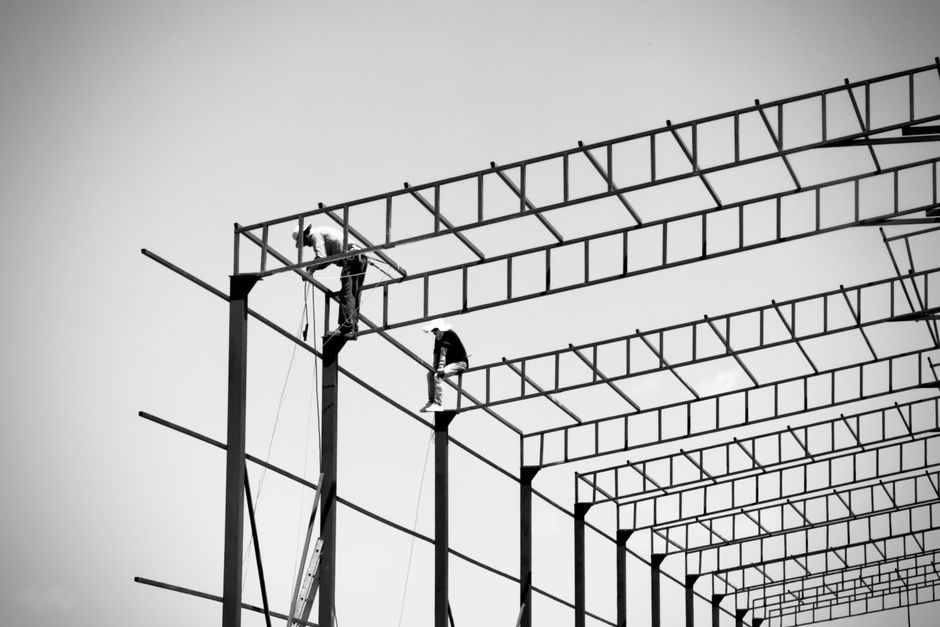
I prefer developers who fabricate their own steel because it creates a closed-loop system:
Visibility: You know exactly where your steel is on the production line. Quality: You don't have to wait for a third-party QC report; your own inspectors are on the floor. Accountability: When you manage the shop, you don't have to argue over change order costs; you just make the adjustment.In the end, industrial development is a game of risk management. By controlling the fabrication phase, you remove the biggest variable in the equation. That is how you hit your opening date—not by wishing for a "fast turnaround," but by building the capacity to control your own destiny.